
NVIDIA's Rugged Supercomputer to Revolutionize In-Orbit Artificial Intelligence
NewsHub
May 28, 2026
1 min read
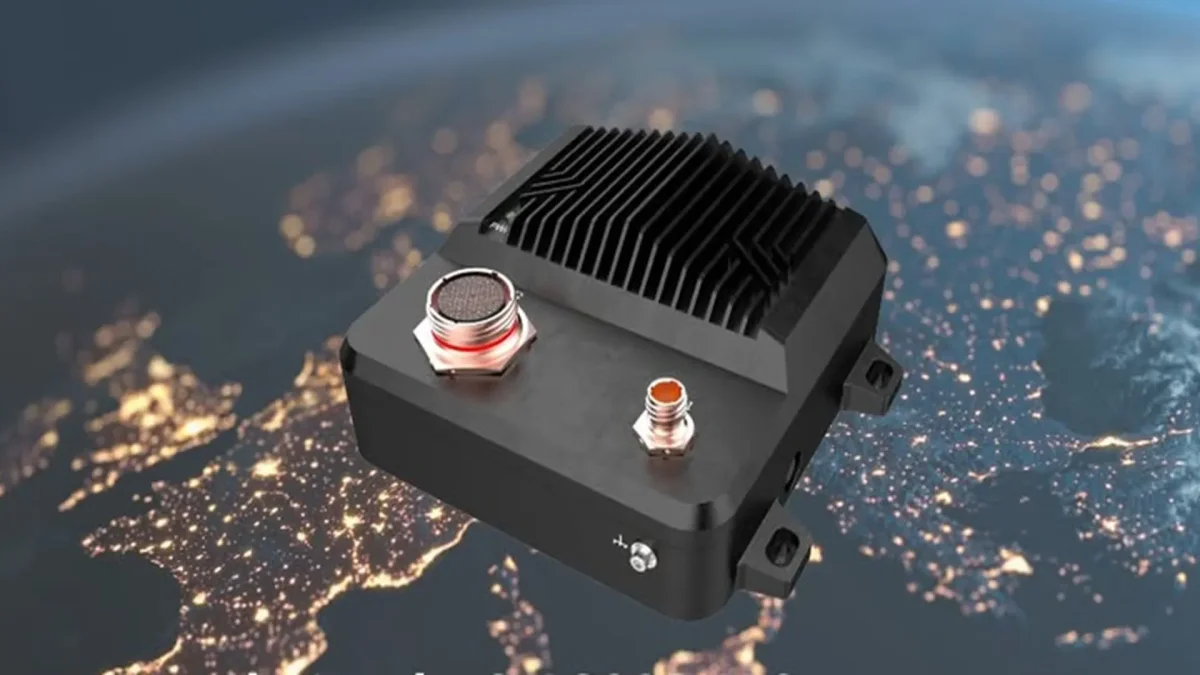
NVIDIA has unveiled a new, resilient supercomputer designed for the demanding environment of space. Leveraging the power of their IGX Thor platform, this cutting-edge system promises to deliver advanced artificial intelligence and high-speed data processing capabilities directly to orbital missions. This development marks a significant step towards enabling more sophisticated on-board computation for satellites and spacecraft, potentially transforming space exploration, Earth observation, and communication networks.
Key Facts
-
Supercomputer Platform NVIDIA IGX Thor
-
Key Capability Enhanced in-orbit computing and AI processing
-
Design Feature Ruggedized for space environment
Impact
The introduction of a robust supercomputer capable of advanced processing in orbit has far-reaching implications. For scientific missions, it means the ability to analyze vast datasets in real-time, accelerating discoveries from deep space or providing immediate insights from Earth observation. In the realm of commercial applications, it could lead to more responsive satellite-based services, such as improved global communication networks with reduced latency or more sophisticated autonomous navigation for spacecraft. This shift from ground-based processing to on-board intelligence fundamentally changes the potential scope and efficiency of space-based operations. Furthermore, this technology could democratize access to powerful space computing. By placing advanced AI capabilities directly on satellites, the reliance on costly and time-consuming data transmission to Earth for analysis is reduced. This can lead to quicker decision-making, enabling more agile responses to dynamic situations, whether it's tracking natural disasters, managing satellite constellations, or conducting complex robotic operations in space. The enhanced computational power will be crucial for future ambitious projects, including lunar bases and Mars exploration.
Key Insights
-
1
Technological Advancement
This represents a critical leap in making high-performance computing space-ready, overcoming environmental challenges like radiation and temperature extremes.
-
2
AI Integration
The integration of AI processing directly into space systems opens up new possibilities for autonomous operations and real-time data analysis.
Opportunities
This innovation presents significant opportunities for companies involved in space technology, satellite services, and AI development. Manufacturers can explore partnerships with NVIDIA to integrate this supercomputing platform into their satellite designs. Software developers can create specialized AI applications for space-based tasks, from image recognition for Earth observation to complex decision-making for autonomous spacecraft. The enhanced capabilities could also spur the growth of new space-based industries that rely on rapid, on-board data processing and AI-driven insights, fostering a more dynamic and innovative space economy.
Risks & Challenges
The primary risks associated with deploying advanced supercomputers in orbit are related to the unforgiving nature of the space environment. Despite ruggedization efforts, the extreme conditions, including radiation, temperature fluctuations, and the vacuum of space, can still pose a threat to the longevity and reliability of such complex electronic systems. Failures in orbit are exceptionally difficult and costly to repair, making mission success highly dependent on the robust and resilient design of the supercomputer. Another significant consideration is the cost and complexity of integrating such powerful computing hardware into spacecraft. The power requirements, heat dissipation, and the sheer physical space needed for a supercomputer can present substantial engineering challenges. Furthermore, the development of specialized software and algorithms capable of running efficiently on this platform in space will require significant investment and expertise, potentially creating a barrier to entry for some organizations.
Source url: https://interestingengineering.com/space/nvidia-igx-thor-space-ai-supercomputer