Tesla's Plaid Model S Still Reigns Supreme Over Ferrari's New Electric Supercar
NewsHub
May 28, 2026
1 min read
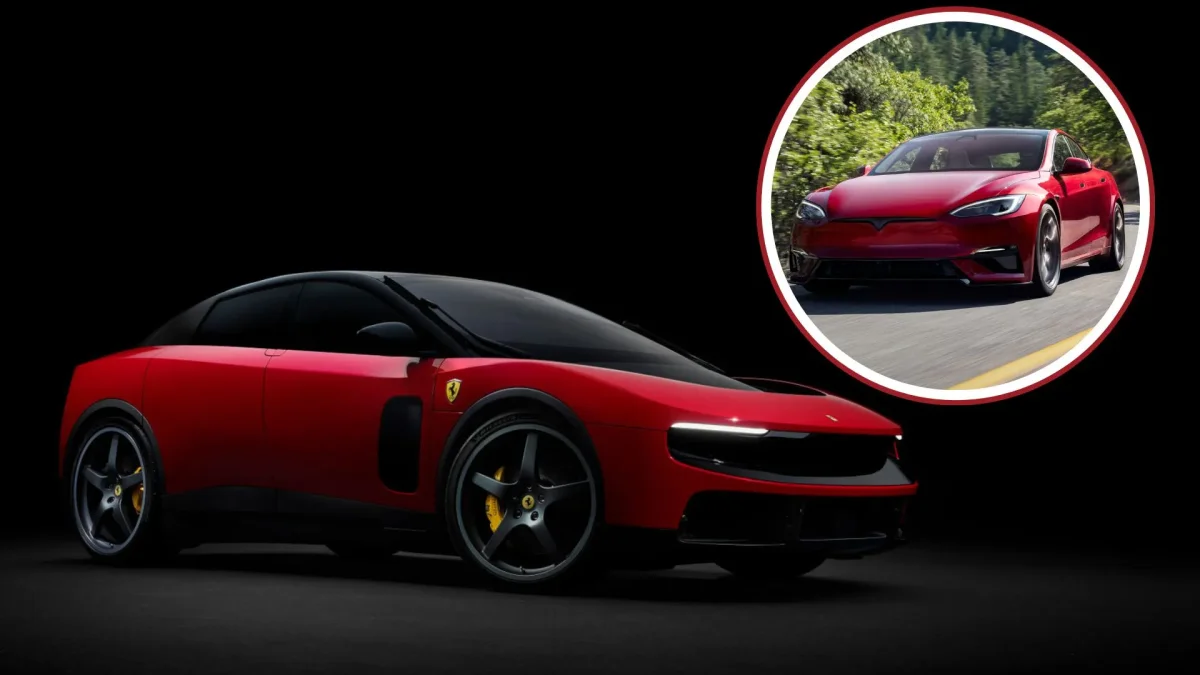
Despite Ferrari's ambitious entry into the electric vehicle market with the 1,050-horsepower Luce, a now-older Tesla Model S Plaid variant continues to demonstrate superior performance in key metrics. The Italian marque's new electric offering boasts impressive charging capabilities, yet the more accessible Tesla sedan maintains an edge in both acceleration and driving range, challenging the notion that the latest technology automatically equates to the best overall performance. This development highlights the continued prowess of established EV players and the intense competition shaping the future of high-performance electric mobility.
Key Facts
-
Ferrari Luce Power Output 1,050 hp
-
Tesla Model S Plaid Performance Advantage Leads in speed and range
-
Ferrari Luce Price Point $640,000
Impact
This comparison has significant implications for both established automakers and new entrants in the high-performance EV segment. For Ferrari, the revelation that a more affordable, albeit older, Tesla can outperform their halo electric product raises questions about their engineering priorities and market positioning. Consumers, particularly those looking for cutting-edge electric speed, may be re-evaluating their options, potentially prioritizing proven performance over brand prestige or the latest technological features. This scenario could also put pressure on other luxury EV manufacturers to not only match but exceed the performance benchmarks set by vehicles like the Model S Plaid. The automotive industry, particularly the luxury and performance sectors, is in a period of rapid electrification. Developments like this underscore the rapid pace of innovation and the potential for established players to be disrupted by more agile competitors. It suggests that while headline-grabbing power figures and charging speeds are important, the holistic performance package, encompassing acceleration, sustained speed, and real-world range, remains a critical differentiator. The success of the Model S Plaid, even years after its introduction, points to a strong foundation of engineering that has yet to be fully surpassed by all newcomers.
Key Insights
-
1
Performance Benchmarking
The Tesla Model S Plaid continues to set a high bar for electric performance, even against newer, more expensive competitors.
-
2
Value Proposition in EVs
Price does not necessarily correlate directly with superior performance in the electric vehicle market, with established models offering compelling value.
-
3
EV Technology Evolution
The rapid advancement of EV technology means that today's cutting-edge can quickly become tomorrow's baseline, emphasizing the need for continuous innovation.
Opportunities
This situation presents a clear opportunity for Tesla to leverage its established performance leadership. They can continue to market the Model S Plaid as a benchmark for speed and range, potentially attracting buyers who are disillusioned with the high cost and perceived performance gaps of newer luxury EVs. Furthermore, this could spur further development and iteration of their existing platforms, solidifying their advantage. For other automakers, the challenge is clear: to not just match but decisively surpass the performance metrics of established models like the Model S Plaid, and to do so at a competitive price point, will be crucial for market penetration and brand perception in the burgeoning electric performance car segment.
Risks & Challenges
A significant risk for Ferrari is the potential damage to its brand reputation and perceived technological leadership. The substantial price difference between the Luce and the Model S Plaid, coupled with the latter's superior performance, could lead to accusations of overpricing and under-delivering on their EV promises. This might deter potential buyers who are seeking the ultimate in electric performance and instead draw them towards more established and arguably more capable options. The automotive world is highly competitive, and a misstep in such a critical and visible product launch could have long-term consequences for Ferrari's standing in the performance EV space. For the broader EV market, this scenario risks creating a perception that innovation is stagnating, or that established players are struggling to keep pace with a seemingly older rival. This could lead to reduced consumer confidence in the rapid advancement of electric vehicle technology, particularly in the high-performance segment. It also highlights the challenge of balancing heritage and luxury with cutting-edge technological capabilities. Automakers must not only deliver on raw performance but also ensure that their new offerings provide a compelling and differentiated experience that justifies their premium pricing and the allure of their brand.
Source url: https://interestingengineering.com/transportation/tesla-model-s-ferrari-luce-ev-comparison
Related Articles